5155 N 16th St UNIT A, Phoenix, AZ 85016



[et_pb_section fb_built=”1″ admin_label=”section” _builder_version=”4.16″ global_colors_info=”{}”][et_pb_row admin_label=”row” _builder_version=”4.16″ background_size=”initial” background_position=”top_left” background_repeat=”repeat” global_colors_info=”{}”][et_pb_column type=”4_4″ _builder_version=”4.16″ custom_padding=”|||” global_colors_info=”{}” custom_padding__hover=”|||”][et_pb_text admin_label=”Text” _builder_version=”4.27.4″ background_size=”initial” background_position=”top_left” background_repeat=”repeat” hover_enabled=”0″ global_colors_info=”{}” sticky_enabled=”0″]
When you ignore the early signs of a TMJ disorder, it causes long-term discomfort and can even damage your jaw and surrounding muscles. Many people suffer from ongoing symptoms without even realizing that their jaw joint is the source of their pain. Once you know the signs to look for, it becomes much easier to seek professional help and prevent the condition from worsening. Want to know the signs that indicate you are suffering from TMJ disorder? Keep reading to find out.
What are the 7 Most Significant Signs of a TMJ Disorder?
This issue generally shows up in ways that you might not expect. However, when you understand the common warnings, you can take prompt action towards relief and better oral health. Watch for these symptoms:
Jaw Pain
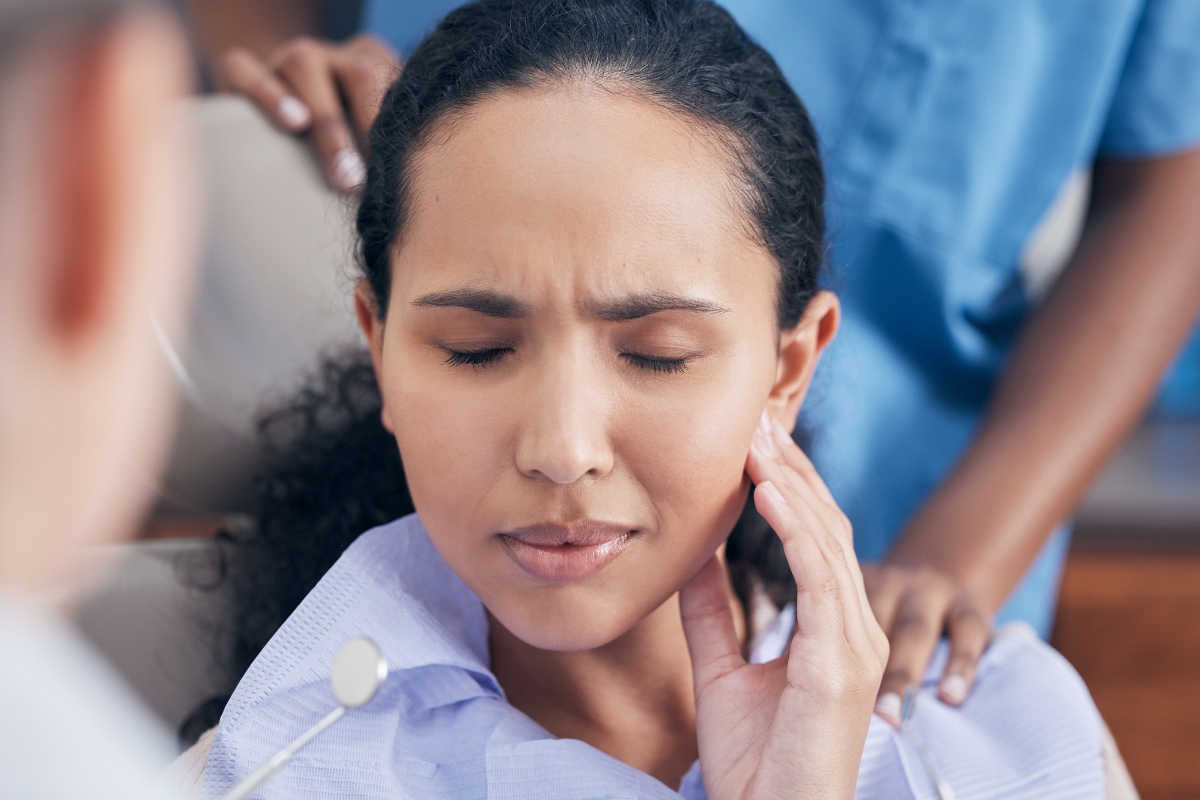
This is one of the most common and noticeable signs of temporomandibular joint disorder. The pain can range from mild tenderness to a deep, aching soreness in your jaw. At times, it may come and or it may stick around all day. You might feel it more when talking, yawning, or eating. If your jaw hurts regularly, it is time to take it seriously.
Ear Pain
When you suffer from this joint problem, you will often feel it is coming from inside or around the ear. This happens because the jaw joint is located very close to the ear canal. Many people even address it as ear fullness or pressure, similar to what you might feel during a flight. If you are experiencing ear pain without an infection, TMJ disorder may be the cause.
Difficulty in Chewing
When the jaw joint is not working correctly, simple actions like chewing can become difficult and painful. You may notice discomfort while biting or chewing certain foods. In more severe cases, the pain may even cause you to avoid harder or chewier foods completely.
Facial Pain
Pain from a TMJ disorder often spreads beyond the jaw. You might experience it in your cheeks, under your eyes, or across the side of your face. This facial discomfort feels like a dull ache or pressure that does not fade away easily. If you find your face hurts without any reason, TMJ can be the cause.
Jaw Locking
One of the most serious signs of this issue is a locked jaw. This occurs when your jaw becomes temporarily stuck, either in an open or closed position. It feels like your jaw is stuck or clicking every time you try to move it. If you experience this, even once, it should not be ignored.
Headaches or Migraines
Frequent headaches, especially those that feel like tension or a dull throb around your temples, can be due to a TMJ issue. The strain on the jaw muscles can cause a migraine or worsen existing headache patterns. If the headache keeps coming back and you find that pain relievers are not working effectively, consider getting your TMJ evaluated by a reputable dentist.
Clicking or Popping Sound
You may hear or feel clicking, popping, or grinding sounds when you open or close your mouth. These sounds usually come from the jaw joint and can be a sign that the joint is not moving smoothly. While it might not be painful, these noises often mean that the joint is under strain or out of alignment.
When you recognize the signs of a TMJ disorder, it can save you from suffering unnecessary pain and protect your long-term oral health. If you experience any of the above symptoms, make sure you do not delay getting evaluated by a trustworthy dental professional. However, if you are in Arizona and find it difficult to locate a reliable dentist, book your appointment at our clinic today! Biltmore Cosmetic & Restorative Dentistry Phoenix is here to ensure you enjoy a long-lasting, healthy smile.
[/et_pb_text][/et_pb_column][/et_pb_row][/et_pb_section]