5155 N 16th St UNIT A, Phoenix, AZ 85016


Let’s be honest: the first thing most people do after hearing “Invisalign” is Google the cost. And what they find is usually a wide range of numbers that don’t make a whole lot of sense without any context. Prices vary dramatically from practice to practice, and it’s not always clear what you’re actually getting for your money.
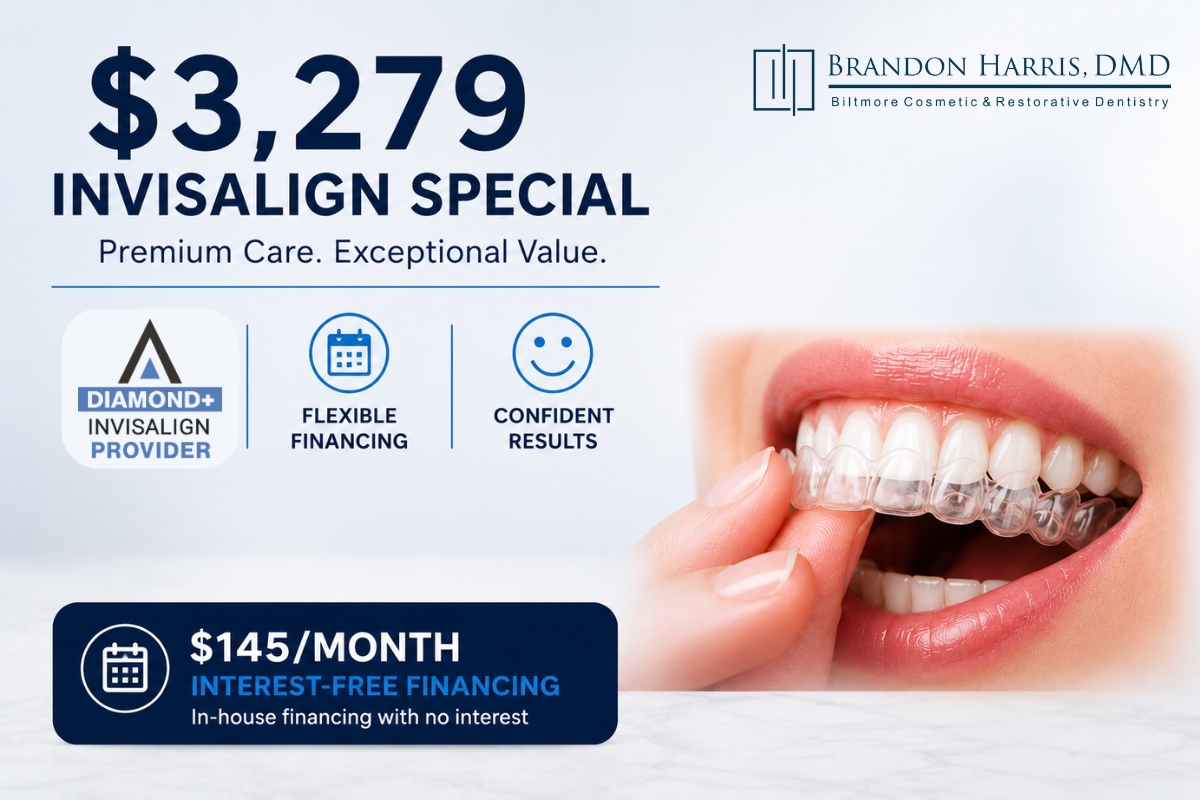
That’s exactly why we put together this breakdown. If you’re considering Invisalign in Phoenix and want to know whether $3,279 is actually a good deal, this post is for you. We’ll walk through what drives the cost of clear aligner treatment, what sets a Diamond Plus Invisalign Provider apart, and why flexible financing makes it more achievable than most people expect.
What Does Invisalign Actually Cost in Phoenix?
Invisalign pricing across the Phoenix area typically ranges from $3,000 to $8,000 or more. That’s a wide gap, and it leaves a lot of patients understandably confused about what they’re actually paying for.
A few key factors drive the cost of Invisalign treatment:
Case complexity is the biggest variable. Mild crowding or minor spacing issues require fewer trays and less treatment time than more significant bite problems or advanced alignment cases. More trays mean more refinements, which add to the overall cost.
Provider experience level plays a major role as well. Invisalign certifies providers at different tiers based on the number of cases completed: Silver, Gold, Platinum, and Diamond Plus. Higher-tier providers have treated more patients, handled more complex cases, and tend to deliver more predictable, consistent results. Dr. Harris is a Diamond Plus Invisalign Provider, one of the highest designations available, which means patients benefit directly from that depth of clinical experience.
What’s included in the quote often matters more than the headline number. Some practices advertise a low starting price and then tack on fees for refinements, retainers, or extra appointments. Getting a clear, itemized breakdown upfront is always worth asking for before you commit.
Why $3,279 Represents Real Value for Clear Aligner Treatment
The $3,279 Invisalign special at our Phoenix office is not a stripped-down version of treatment. It’s comprehensive clear aligner care delivered by a Diamond-level provider at a price that makes the process genuinely accessible for most patients.
Think about what’s included in that number. You’re working with a provider who has completed a significant volume of Invisalign cases and has the hands-on experience to handle everything from simple corrections to more involved alignment challenges. That experience directly shapes the quality of your treatment plan, the accuracy of your aligner fit, and the smoothness of your overall experience.
At $145 per month with in-house, interest-free financing, Invisalign in Phoenix starts to look a lot more manageable. For many people, it’s comparable to other monthly expenses they don’t think twice about, except this one has a clear endpoint and a result that sticks with you long-term.
Invisalign vs. Traditional Braces: Is It Worth the Investment?
If you’re weighing Invisalign against traditional metal braces, the cost difference is often smaller than people expect, and the lifestyle difference is significant.
Comfort is one of the most frequently mentioned advantages. Clear aligners are made from smooth thermoplastic material, with no metal brackets or wires to irritate the inside of your cheeks or gums. Most patients adapt within the first few days of a new set.
Appearance matters, especially for working adults. Invisalign trays are nearly invisible when worn. Most people around you won’t know you’re in treatment unless you tell them, which is a meaningful quality-of-life difference compared to fixed braces.
Convenience is where clear aligner therapy really stands out. Because the trays are removable, you can eat and drink whatever you want, brush and floss your teeth normally, and maintain your usual oral hygiene routine without the extra effort that braces require.
Treatment time for Invisalign is often comparable to braces, and in some cases faster. Many patients complete their full treatment in 12 to 18 months, though simpler cases can wrap up sooner. Dr. Harris will give you a realistic timeline estimate during your consultation based on your specific teeth.
For most adults and teens in Phoenix looking for a teeth-straightening option that fits into a real daily routine, Invisalign tends to be the more practical and comfortable path.
What a Diamond Plus Invisalign Provider Actually Means for Your Results

The Diamond Plus designation isn’t just a badge on a website. It represents a clinically meaningful level of experience that has a direct impact on your treatment.
To reach Diamond status, a provider must complete a high volume of Invisalign cases, well above what Silver, Gold, or even Platinum providers have treated. That volume of real-world experience means Dr. Harris has encountered a broad range of alignment challenges, refined his approach to treatment planning, and developed the clinical instincts that come from working through complex cases over time.
For patients, this translates into a few concrete benefits. Your treatment plan is developed by someone who has seen similar cases before and knows how teeth respond to clear aligner therapy at each stage. Aligner fits tend to be more accurate. Issues that could extend treatment are more likely to be caught and addressed early. And overall, the process runs more smoothly because the provider has been through it many times.
When you’re choosing where to get Invisalign in Phoenix, the provider’s experience tier is one of the most useful data points you have. It’s not about prestige. It’s about the likelihood that your treatment goes as planned and delivers the result you’re expecting.
Flexible Payment Options That Remove the Barrier
Cost is the number one reason people put off starting Invisalign. They want to do it; they know it’s the right call, but the upfront number gives them pause. That’s a completely understandable reaction, and it’s something we’ve built our financing around addressing.
All it takes to get started is a bank or credit card. From there, the team will work with you to set up an in-house, interest-free payment plan that fits your actual budget. The interest-free part matters: the number you agree to at the start is the number you’ll actually pay, with nothing quietly accumulating in the background.
If your dental insurance includes orthodontic benefits, those can often be applied toward your Invisalign treatment as well. It’s worth checking with your provider before your consultation so you have a clear picture of what your out-of-pocket cost will be.
The bottom line is that your budget shouldn’t be what’s standing between you and a smile you’re confident in.
What the Process Looks Like from Start to Finish
Starting Invisalign in Phoenix at our office begins with a consultation. No commitment, no pressure. You’ll meet with Dr. Harris, talk through your goals, and find out whether Invisalign is the right fit for your case.
If you decide to move forward, your treatment plan is built around your specific teeth using digital imaging and Invisalign’s planning technology. You’ll actually be able to see a projected outcome before your first tray even goes in.
Once your custom aligners are ready, you’ll pick them up and get started. Each set of trays is worn for about two weeks before progressing to the next set, with periodic check-in appointments along the way. Most patients are surprised by how naturally it fits into their routine once they get going.
After treatment wraps up, you’ll transition to a retainer to keep your results in place. Teeth have a natural tendency to drift back over time, and wearing a retainer as directed is what makes sure your new smile stays exactly where it should be.
Schedule an Invisalign Consultation in Phoenix
If you’ve been thinking about straightening your teeth and want to know exactly what it would cost and what to expect, a consultation is the right first step. Dr. Harris and the team at Biltmore Cosmetic & Restorative Dentistry in Phoenix are here to answer your questions and help you figure out whether Invisalign is the right fit.
With a $3,279 special, Diamond-level provider experience, and flexible payment options starting at $145 per month, there are fewer barriers between you and your best smile than you might think.
Frequently Asked Questions About Invisalign Cost in Phoenix
Is $3,279 the full price, or are there extra costs?
During your consultation, Dr. Harris will review your specific case and give you a full, transparent cost breakdown before you commit to anything. The goal is no surprises.
Does dental insurance cover Invisalign?
Many plans that include orthodontic benefits will cover a portion of Invisalign treatment. The team can help you verify your coverage and apply your benefits toward your total cost.
How is a DiamondPlus provider different from a Platinum provider?
DiamondPlus is a higher designation than Platinum, reflecting a greater number of completed Invisalign cases. It’s one of the top-tier Invisalign awards based on clinical volume and experience.
Can I really get started for $145 per month?
Yes. In-house, interest-free financing makes monthly payments as low as $145 possible for qualifying patients. Your consultation is the best place to get a payment plan dialed into your situation.
How long will my treatment take?
It depends on the complexity of your case. Most patients complete treatment in 12 to 18 months. Dr. Harris will walk you through a realistic timeline estimate at your consultation.
What happens if my teeth need additional corrections mid-treatment?
Invisalign allows for refinements during treatment if needed. Dr. Harris monitors your progress at each check-in appointment and adjusts the plan if anything needs to be addressed.
Is Invisalign worth it compared to braces?
For most patients, yes. The combination of comfort, aesthetics, and convenience that clear aligner therapy offers is difficult to replicate with traditional braces, and the cost difference at our price point is often smaller than people expect.